How to Choose the Right Cutless Bearing (Boat Shaft Guide)
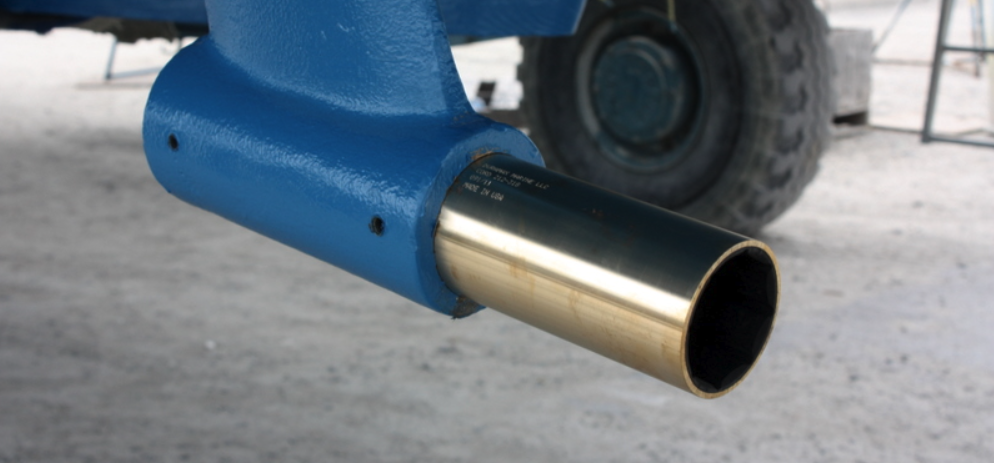
A cutless bearing (oftentimes spelled “cutlass”) supports your propeller shaft where it exits the hull through the strut or stern tube. Cutless bearings keep the shaft centered in place, reduce vibration, and use water for lubrication and cooling of the propeller shaft.
Choosing the correct cutless bearing is of the utmost importance – the wrong size can cause vibration, noise, overheating and fast wear. The good news? It’s not that difficult to measure correctly once you understand a few basics.
Here’s how to choose the right cutlass bearing for your drive shaft.
What a Cutless Bearing Does
A cutless bearing consists of:
- A rigid outer shell (bronze or composite)
- A rubber or polymer inner liner
- Grooves (called flutes) inside the liner
The grooves in the liner allow water to flow through the bearing while the shaft spins. This water creates a thin lubricating film that reduces friction and carries away heat and debris from the shaft.
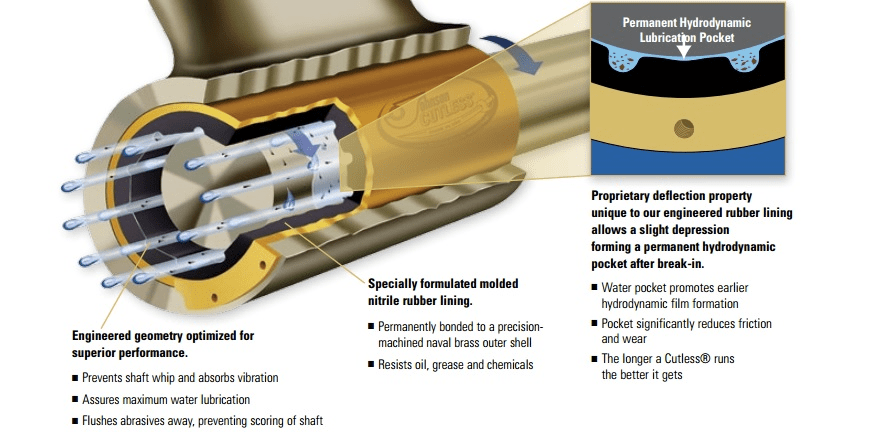
Cutlass bearings are designed to run wet. Without water flow, they’ll overheat and wear quickly.
Step 1 to Finding Your Correct Cutless Bearing Size – Measure Your Prop Shaft (Don’t Rely on Old Specs)
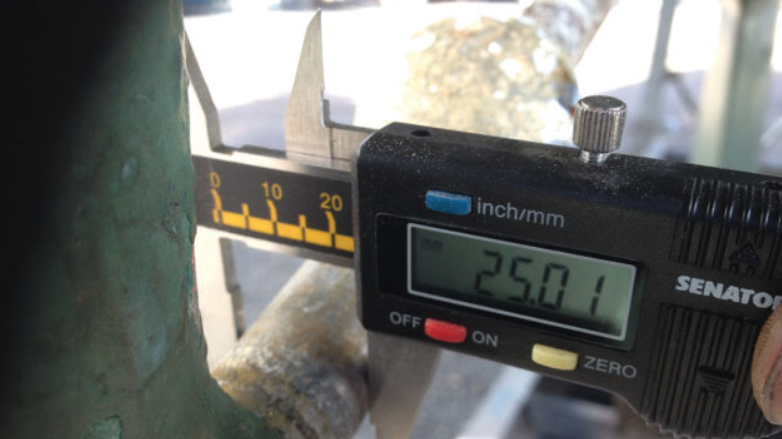
Always measure the propeller shaft — don’t assume the size from boat paperwork or the old bearing.
Use calipers and measure:
- In several spots along the prop shaft
- Around the shaft circumference
- On a clean, unworn section if possible
Key here: Use the largest consistent measurement you find.
Why this matters: shafts wear down over time. If you size the bearing to a worn measurement, the new bearing may end up too loose.
Most shaft sizes follow standard increments (like 1″, 1-1/4″, 1-1/2″), but it’s best to always confirm.
Step 2 – Understand Proper Clearance
A common misunderstanding is that the bearing internal diameter (ID) should exactly match the shaft size. Not exactly.
Cutless bearings are designed so that after installation there is a small, planned clearance between the shaft and the liner. This gap is necessary so water can form a lubrication film.
The clearance is necessary to prevent overheating, allow water lubrication and reduce wear.
If the cutlass bearing fits too tight, you’ll get heat and rapid failure
If the cutlass bearing is too loose, you’ll get vibration and shaft movement
Manufacturers as well as the US Navy publish cutless bearing clearance ranges based on shaft diameter — follow those when available.
Step 3 – Measure the Housing (Outside Diameter and Length)
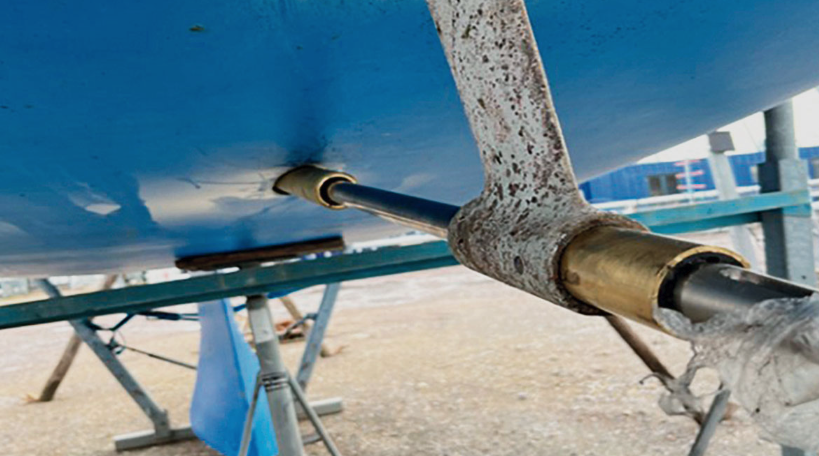
Next, measure the space where the bearing is installed:
- Inside diameter of the strut or stern tube
- Length of the bearing cavity
Your new bearing must match:
- Outside diameter (OD) — to fit the housing
- Length — enough to properly support the shaft
Typical bearing length is about 3 to 4 times the shaft diameter, though designs vary.
If a bearing is slightly too long, it can often be trimmed carefully. If shorter, some setups allow two bearings in line.
Step 4 – Choosing the Right Cutlass Bearing Shell Material
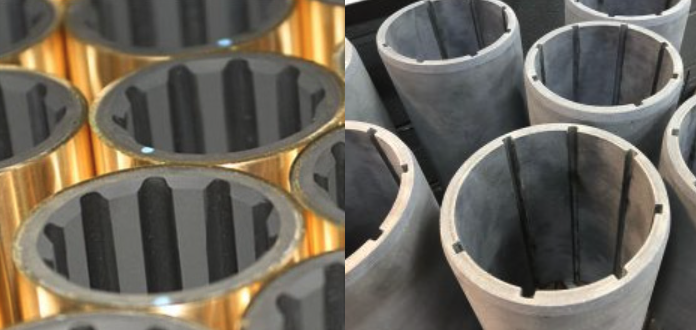
You’ll usually choose between two types of material for your new cutlass bearing.
Bronze / Brass Shell
This is the most used material. It’s best for standard saltwater and freshwater boats, metal struts and traditional installations. It’s a strong material, proven, and widely used.
Composite (Non-Metallic) Shell
Composite shell bearings are best for corrosion-sensitive environments, electrolysis concerns, and mixed metal systems such as a steel shaft in a bronze strut.
Electrolysis occurs when you have two different metals in contact with seawater, creating a small electrical current that corrodes the more reactive metal. This can slowly damage bearings and housings over time.
You might need a composite shell bearing if you notice corrosion deposits, pitting, unusual vibration, or faster bearing wear. Composite cutless bearing shells resist this galvanic corrosion and protect shafts and struts in these setups.
Step 5 – How to Install Your Cutless Bearing
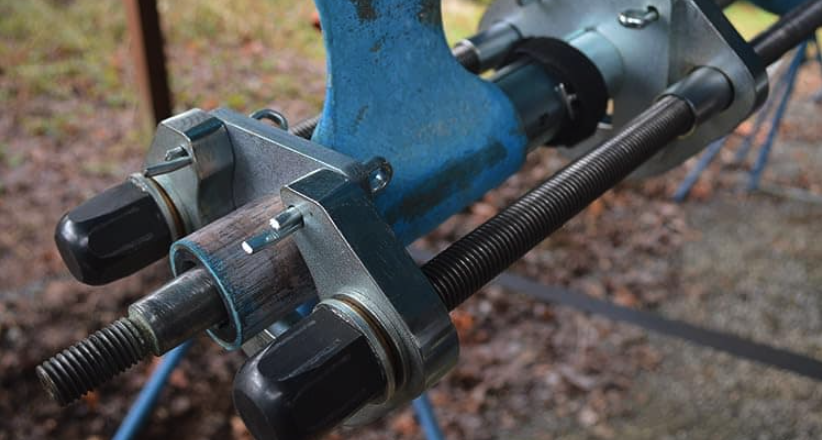
The following steps will help you get your new cutlass bearing installed:
- Prepare the housing and shaft – Clean the strut or stern tube thoroughly. Remove old bearing material, corrosion, and debris, and lightly polish the shaft. Check the shaft for scoring or wear; a damaged shaft will ruin a new bearing quickly.
- Install the bearing – The installation method depends on the type of housing:
- Press fit: Use this when the housing bore is close to the bearing OD. Push the bearing evenly into place with a bearing press such as the Strut Pro. It’s best to avoid hammering the bearing, as this can damage the liner or the bearing itself, but if you do want to go this route, do it carefully using a mallet and a wood block. The wood block acts as a buffer between the mallet and the bearing, spreading the force and protecting the rubber liner from damage. Strike lightly and evenly around the bearing – never hit it directly – to avoid damaging the liner.
- Bedding fit (with epoxy or chocking compound): Use this when the housing is slightly oversized or worn. Apply the compound to the bearing or housing, then slide the bearing into place for a secure fit.
- Align the shaft and check rotation – Before finalizing, make sure the shaft is straight and rotates smoothly. The shaft should turn freely with a thin layer of water between the shaft and liner.
Final inspection – Verify flutes are unobstructed for water flow, and ensure the bearing is seated fully and evenly – misalignment can cause the bearing to wear quicker due to uneven loading. Check that any set screws or retention methods are secure but not overly tight.
Side Note: About the Strut Pro Tool
Removing an old cutless bearing can be the toughest part of the job. Specialized tools – such as the Strut Pro cutless bearing replacement tool – are designed to press the bearing out of the strut without having to remove the shaft in most cases. This can greatly reduce labor time and lower the risk of strut damage compared to other removal methods.
How to Know When It’s Time to Replace Your Cutless Bearing
If you see any of the following, it might be time to change your cutlass bearing:
- Excess shaft play at the strut
- New vibration or rumbling
- Knocking sounds when underway
- Visible liner wear or rubber deterioration (when 1/2 of water V groove has been worn away)
Quick check: try lifting the shaft at the strut — if you notice movement, that usually means the bearing is worn.
Where to Buy Your New Cutless Bearings
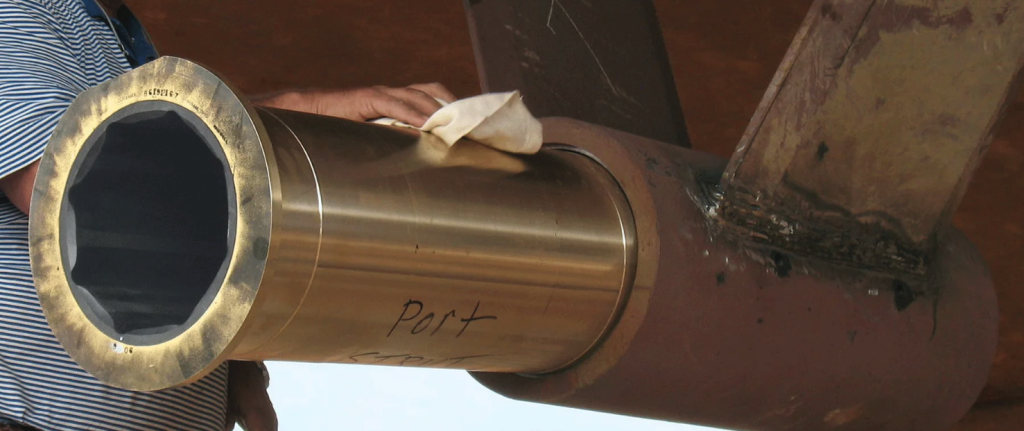
We carry a wide variety of products for your boat’s propulsion system, including cutlass bearings, shaft seals, propellers and more.
See our available cutlass bearings, here:
Any questions, don’t hesitate to contact us here!
Have a good one!

Citimarine Store
10801 NW 33rd St.
Miami, FL 33172
1-(800)-766-5256
sales@citimarine.com
CitimarineStore.com
–







Leave a Comment