How Propeller Pitch and Diameter Affect Boat Performance
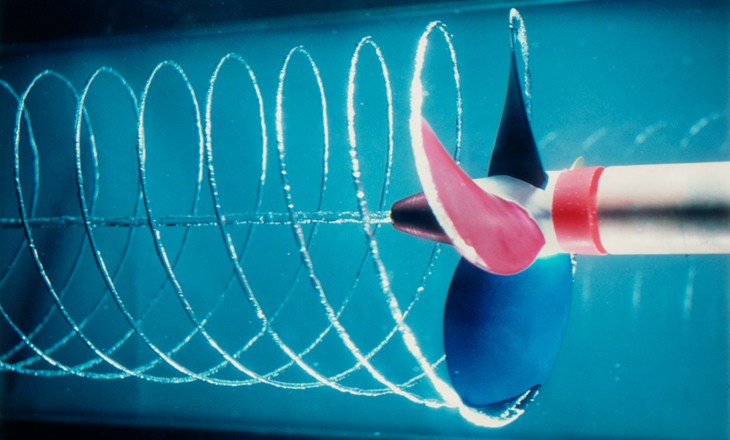
When purchasing a new marine propeller, it is important to know what propeller pitch and diameter would best suit your boat. With this guide, you will learn not only what boat propeller pitch and diameter are, but how they affect your boat’s performance.
What is Boat Propeller Pitch?
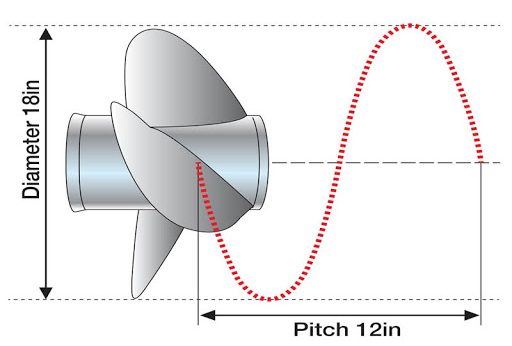
The propeller pitch is the distance that a propeller would move in one revolution if it were moving through a soft solid, like a screw through wood. It indicates the distance that a propeller would “drive forward” in each complete rotation.
For instance, a prop that moves forward 21 inches in one revolution is said to have a 21 inch nominal pitch.
In reality, since a marine propeller is attached to a shaft it won’t be driving forward, but will instead propel your boat forward. The distance a boat is propelled forward, however, is actually less than the pitch. The difference between the nominal pitch and actual distance traveled by the vessel in one rotation is called slip.
Typically blades are twisted to guarantee constant pitch along the blades from root to tip.
Propeller pitch effectively converts torque – the twisting or rotating effort – of the propeller shaft to thrust – the effort delivered by the propeller to push the vessel ahead – by deflecting or accelerating the water astern – simple Newton’s Second Law.
How Propeller Pitch Affects Your Boat Performance
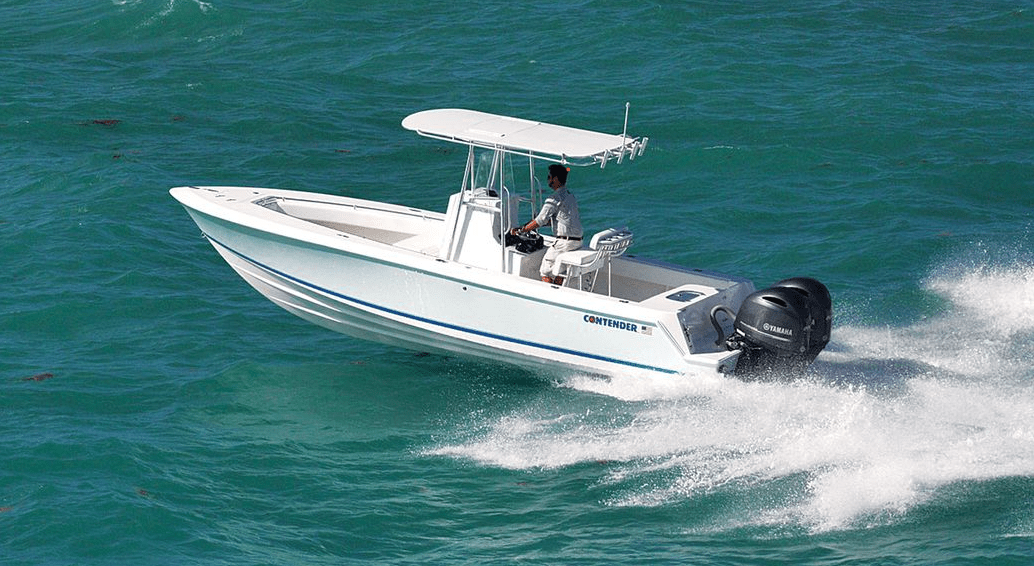
The lower the boat propeller pitch, the better your “hole-shot”, or ability to get up to speed very quickly from a standstill. However, this improved acceleration comes at a price: top speed. Lower pitch will cause your engine to reach maximum rpm at slower speeds.
On the other hand, a higher pitch affects your boat performance by delivering greater top speeds, but at the expense of your acceleration or hole-shot. (Warning: lower-horsepower engines can bog down if fitted with a propeller with too high of a propeller pitch. This can cause heavy wear on the internal engine parts, who will have trouble keeping up).
If you’re changing the pitch on a recreational boat, there’s a rule of thumb often used that says each inch of pitch is generally worth 150 – 200 rpm. Lowering the pitch increases rpm and vice versa. So for instance, if you were to lower from a 23-pitch to a 21-pitch propeller, you’ll increase engine RPM by about 400 revolutions.
The trick is to choose a boat prop that delivers acceptable acceleration and a top speed.
Be prepared with vital information on your boat when purchasing a new boat prop, such as:
- Type of engine
- Horsepower rating and other engine specs you can bring
- Boat’s weight and hull style
- Current type of prop – number of blades, as well as diameter and pitch (usually stamped on prop)
What’s most important is your performance goals. If you load your boat with heavy gear, you might need a lower propeller pitch to get your boat moving from a standstill. If not weighed down by anything, you may just want a higher top speed, and in that case, a higher pitch is what you’d want.
Propeller Diameter and How It Affects Your Boat Performance – Boat Propeller Diameter and RPM
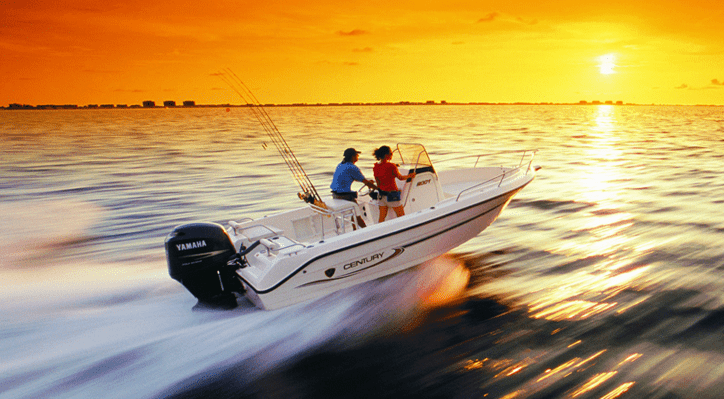
The diameter of your boat propeller is how long it measures from the tip of one blade, straight across to the tip of an opposite blade (or where a blade tip would be). Easiest way to figure out is two times the distance from the center of the hub to the tip of any blade.
You figure out what propeller diameter you need mainly by the RPM at which the propeller will be turning and the amount of power that will be needed.
With the exception of high speed (35+ knots) vehicles, the diameter of the prop is proportional to propeller efficiency (higher diameter equals more efficiency). For most vessels, a small increase in diameter means a dramatic increase in thrust and torque. In higher speed vessels like mentioned above, however, a larger diameter equates to high drag.
Diameter generally increases for props on slower boats and decreases on faster boats.
Pitch Ratio of Your Boat Propeller
You may come across the term pitch ratio when picking out a new propeller. This is simply the ratio of pitch to diameter, and generally falls between 0.5 and 2.5 with an optimal pitch ratio for most vessels closer to 0.8 to 1.8.
Looking for a New Boat Prop? We Can Help
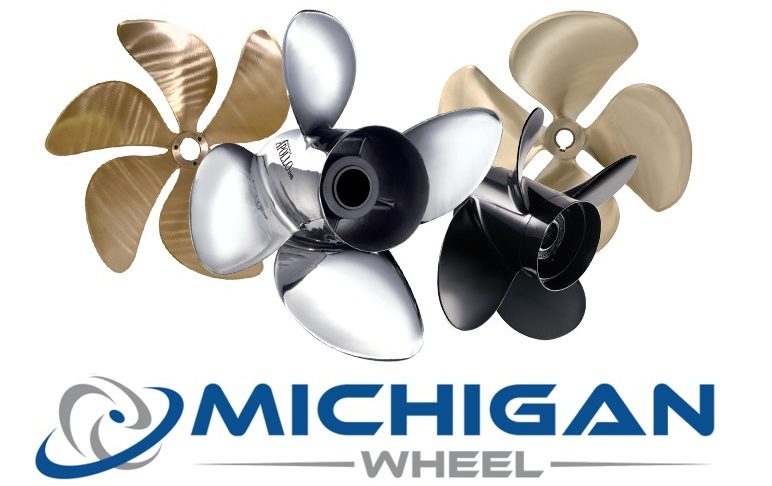
If looking for a new prop, contact us here or chat with us below, and we can help get you the correct prop for your boat. We carry Michigan Propellers. With more than 100 years of superior manufacturing, Michigan Wheel continues to make time-tested designs, dimensionally inspected using the latest electronic measurement equipment. Michigan Wheel’s high-quality propellers are made with certified virgin ingot metals, meaning no scrap and more consistent, durable propellers.
See the complete line of Michigan Props, here!
Have a good one!

Citimarine Store
3300 NW 112th Ave, #4
Doral, FL 33172
1-(800)-766-5256
CitimarineStore.com
–
Related Posts:







12 Comments
I was wondering if you could help me find a prop. I have a 2012 Chaparral 18 with a 3.0 Mercruiser. I am looking for a stainless steel prop. It currently has an aluminum 14.5 x 18 pitch prop. Thanks
Hi Chad, we can definitely help. Please reach out to our sales guys at 1 (800) 766-5256 or shoot them a message in the chat below!
Do you sell boat propeller if yes email me with the models for me to select one and proceed.
Hi Ben, we carry Michigan propellers. You can find our available models here: Michigan Propellers. For more detailed assistance, please contact us.
I have a Mercury 80hp (not sure yr…late 80’s) it’s on a 21ft pontoon. I need a prop. No prop on motor at purchase.
Hi Steve, we’ll be able to help you with that. Please send us an email to sales@citimarine.com, call 1-800-766-5256 or chat with us below!
I am looking for a stainless steel prop for my Mercury 60hp, 4 stroke. It is on a Tracker 17 TXW. Factory prop us 10 3/8 x 14.
Hello Chris, please contact our sales team at sales@citimarine.com, they will take care of you.
I own a Bulls Bay 2000 with a 115 Suzuki and was wondering what is the best prop to use?
Hi Tim,
A good all-around starting point for a Bulls Bay 2000 with a Suzuki 115 is usually a 3-blade stainless prop in the 19-pitch range — typically around 13.75″ x 19″ or 14″ x 19″, depending on the prop brand and engine setup.
That setup generally gives a nice balance of:
Hole shot
Midrange fuel economy
Top-end performance
Most owners with that combination seem to end up happiest in the 17P–19P range depending on how heavily the boat is loaded and how they use it.
A few general guidelines:
19P stainless: Best all-around option for lighter to moderate loads and higher top-end speed
17P stainless: Better if you regularly carry multiple passengers, full gear, coolers, livewells, or run in rough water
4-blade props: Great for improved grip, shallow water performance, staying on plane at lower speeds, and better handling in chop
If the boat currently has an aluminum prop, upgrading to stainless usually improves acceleration, handling, and overall efficiency.
The biggest thing is making sure the engine can still reach Suzuki’s recommended WOT RPM range when fully loaded. If you can share:
Current prop size
Current WOT RPM
Approximate top speed
Whether you have a T-top
Typical load/passenger count
…then we can narrow it down much more accurately.
Hope this helps!
I would like to know what prop recommendation you have for a 1998 Triton Tr 21 with a 2008 Yamaha V Max Series 2 outboard. I have been trying to figure this out but 6 different props in just not sure. Currently 26P Fury 4 blade and also a 26 Fury 3. Have tried Tempest 25 3, Trophy 24 4, Tempest 27 3 and original start off 25 Fury 3. The Tempest seem to slip too much and too many rpms (over) 6k. Trophy on hole shot at all. Fury 25 ok hole shot too many rpms 60 knots. Fury 26 better hole shot and good top end speed but still over 6k. Fury 26 4 no slip at all that I can tell way better bow lift and on pad faster good top end. BUT engine seems to bog around the 3k range for probably 30/40 seconds? before rpms kick in and run like a rabbit. Tournament loaded 56 gal fuel cap. and 400 lb body weight, prop shaft 3 ” below pad.
Based on everything you’ve tested, I actually think you’re already very close with the 26P Fury 4. The fact that it gave you the best bow lift, fastest pad performance, least slip, and strongest overall handling tells me the hull clearly likes a 4-blade prop with more grip and stern lift.
I do not think your setup is drastically over-propped, because if it was, you would typically see poor overall performance everywhere — not your best overall results. The 3,000 RPM “bog” you’re describing sounds more like the prop loading the motor too hard during the transition onto pad, especially with a tournament load, full fuel, and 400 lbs of passengers.
Before changing props completely, I would first try:
More PVS venting on the Fury 4
Slightly raising engine height from 3” below pad toward about 2.75”
Possibly having the 26 Fury 4 lightly worked or blueprinted
I would not drop all the way to a 24P Fury 4. Based on your previous testing, that would likely over-rev the motor and hurt top-end efficiency.